ServicesWater Filtration
Whole Home Water Filtration in Watertown
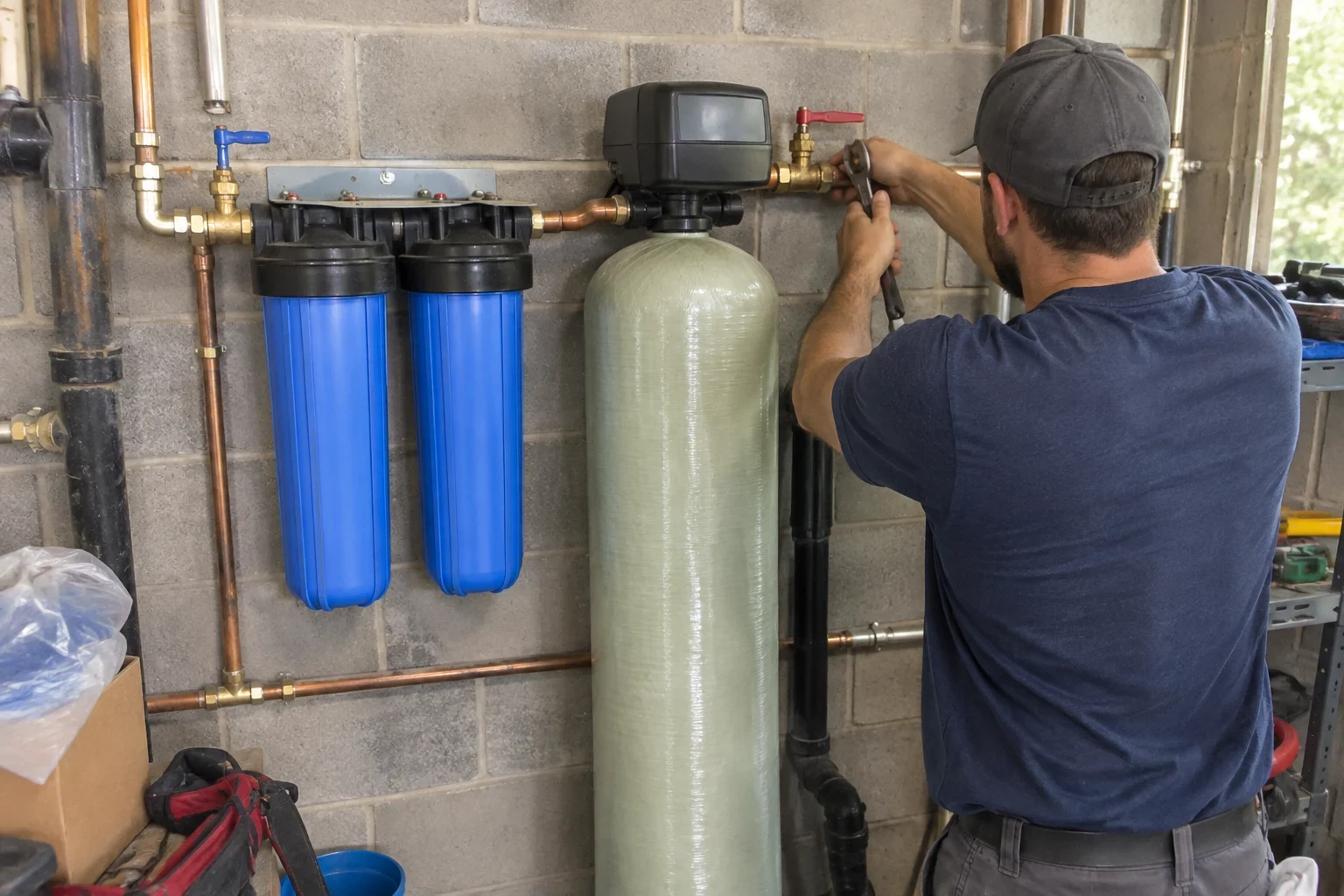
Before we recommend any equipment, we find out what is in your water. Then we tie a treatment system into the main supply so every faucet, shower and appliance in your home gets filtered water. It is sized to your flow and your test results, not pulled from a catalog.
Filtered water at every tap, not just the kitchen
We mount the system on the main supply just past the shutoff valve, or past the pressure tank if you are on a well. That placement means everything after it is treated: showers, the washing machine, the water heater and the ice maker. An under-sink unit only cleans the one faucet it serves.
What goes on that line depends on what the water carries. City water usually has chlorine or chloramine left over from treatment. Wells in Middle Tennessee often draw hard water off limestone, and some bring iron, sulfur or sediment along with it. Each of those needs different media, which is why the test comes before any recommendation.
We go over the results in plain terms and tell you what is worth treating and what you can leave alone. If a basic sediment and carbon setup handles it, that is what we will suggest.
What the installation includes
Water testing
We check hardness, chlorine, iron, pH and sediment at your home. On wells we talk through whether a lab test for bacteria makes sense.
Sediment pre-filter
A cartridge filter, often in the 5 to 20 micron range, catches sand and grit before it reaches the main media tank. That protects the tank and stretches its service life.
Main treatment tank
Catalytic carbon for chlorine and chloramine, an oxidizing filter for iron and sulfur, or a softener for hardness. Some homes need two stages, and we size each by gallons per minute so you do not lose pressure at the shower.
Bypass and shutoff valves
A three-valve bypass lets you keep water running to the house while the filter is serviced. You will not be without water during a cartridge change.
Drain line and bonding
Backwashing tanks need a drain with a proper air gap so wastewater cannot siphon back. If your metal piping is part of the electrical ground, we add a bonding jumper across the new equipment so that path stays intact.
Walkthrough and cleanup
We show you how to read the control head, when to change cartridges and how to use the bypass. Old fittings and packaging leave with us.
Signs your home could use filtration
White crust on fixtures
Scale on shower heads, faucet aerators and glass doors means hard water. The same minerals coat the inside of your water heater and appliances.
Chlorine smell or taste
A pool smell from the tap is leftover disinfectant. Carbon filtration removes it at every faucet, including the shower.
Orange or brown stains
Rust-colored rings in toilets and tubs point to iron, common on wells. It also stains laundry and builds up in valves.
Rotten egg odor
That smell usually comes from hydrogen sulfide in well water. An oxidizing filter can take it out before it reaches the house.
Grit in screens and aerators
Sand in faucet screens or washer inlet filters means sediment is getting through. A pre-filter stops it at the main line.
How the job runs
- 1
Test and talk it through
We test your water at the home and look at where the main line comes in. You get a written recommendation with the equipment listed line by line.
- 2
Pick the install spot
Most systems go in a garage, utility room or crawlspace entry near the main. We check floor space, drain access and an outlet for the control head.
- 3
Install and pressure test
We shut off the water, cut in the bypass and tanks, connect the drain and bonding, then bring the system up slowly and check every joint under pressure. Water is typically off for a few hours.
- 4
Flush and set up
New carbon and media tanks get flushed to clear fines. We program backwash cycles for a time you are not using water and walk you through upkeep.
What moves the price
Your price depends on what the water test turns up and how easy it is to get at the main line. You see the full number before we cut into any pipe, so you have time to decide. We take cash and all major credit cards, and financing options can spread the cost out if that suits you better.
- What we are treating
- One carbon tank for chlorine costs less than a train of sediment, iron and softener stages. The test results decide how many stages are worth paying for.
- Flow rate and home size
- Each extra bathroom raises peak demand. A bigger tank or wider ports hold pressure steady, and that adds to the cost.
- Location of the main
- A main running up an open garage wall is quick to tie into. One in a tight crawlspace or behind a finished wall takes more time to reach and re-pipe.
- Drain and electrical access
- Backwashing tanks need a drain and the control head needs power. With no floor drain or outlet close by, we run a drain line or arrange power, which adds labor.
Water filtration questions
Something not covered here? (615) 488-4514
Do I need a softener, a filter or both?
They do different jobs. A softener swaps the calcium and magnesium that cause scale for sodium or potassium, but it barely touches chlorine taste or odor. A carbon filter strips out chlorine and leaves the hardness in place. Your water test tells us which one your home needs, and some homes do need both.
How much upkeep does the system take?
The sediment cartridge is the part you will handle most, usually every few months and more often if your water carries a lot of grit. Carbon and media tanks go for years before the media is due for rebedding. If you have a softener, plan on adding salt on a regular schedule.
Will a whole home filter cut my water pressure?
When the equipment fits your home's demand, you should not notice a change at the shower. Pressure drops usually trace back to a tank too small for the flow or a cartridge clogged with sediment. We size every stage to your peak gallons per minute and use full-port bypass valves so nothing chokes the line.
Should I keep a separate filter at the kitchen sink?
It depends on what you want from your drinking water. The whole home system handles chlorine, sediment, iron and hardness for every tap. Reverse osmosis drinking water is a different unit that mounts under the sink, and it is worth adding only if you want that extra step.
Is filtered water easier on my water heater?
Yes. Removing hardness slows the scale that builds up in tank heaters and keeps the heat exchanger in a tankless unit cleaner. If you are also planning a tankless water heater installation, it makes sense to plan the water treatment at the same time.
Find out what is in your water
We will test it at your home, explain the results and tell you what is worth fixing. The estimate is free, and if something urgent comes up with your plumbing, we answer around the clock.