ServicesTankless Water Heaters
Tankless Water Heater Installation in Watertown
We size a tankless unit to the showers and fixtures your home actually runs at once. Then we check the gas line, venting or electrical service it needs and install it so it heats properly in January, not just in July.
What a Tankless Install Really Involves
A tankless water heater fires its burner or elements only when a hot tap opens, warming the water as it passes through a heat exchanger. Nothing is stored, so you stop paying to keep a big tank hot around the clock. The catch is a ceiling on flow. Each unit is rated in gallons per minute at a given temperature rise, and if two showers and the dishwasher together ask for more than that, the water at the tap cools.
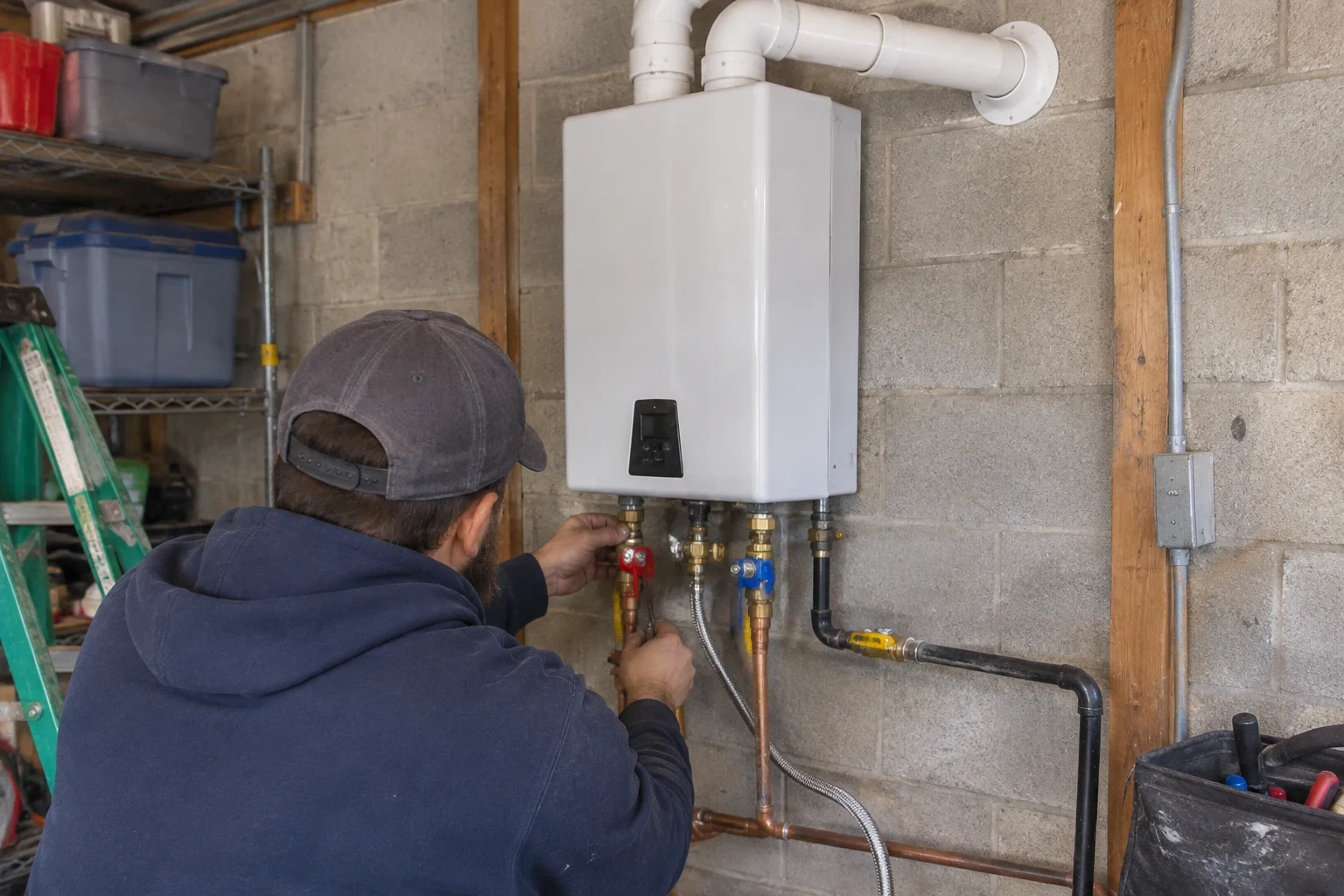
That is why most of the work happens before the new unit arrives. A gas tankless model can draw close to 200,000 BTU, far more than a typical tank heater, and often needs a larger gas line and a new vent route. An electric model may need several dedicated breakers and more panel capacity than the house has. We check all of it first and tell you plainly whether tankless makes sense for your home, the same answer we would give a neighbor.
What Our Tankless Installation Includes
- Flow-rate sizing for your fixtures
- We tally which showers, faucets and appliances in your home tend to run at the same moment and work out how many gallons per minute that adds up to. That figure is checked against the rise from your incoming water temperature to about 120 degrees, which is exactly where an undersized unit comes up short.
- Gas line check and upsizing
- We measure the run from the meter and add up every gas appliance on it. If the existing half-inch line cannot carry the load, we run a properly sized line so the burner gets the volume it is rated for.
- Venting that matches the unit
- A condensing heater exhausts through PVC pipe and produces acidic condensate, so we add a drain line, usually with a neutralizer to protect the drain it empties into. A non-condensing heater runs hotter and requires stainless steel vent pipe. The flue from an old tank rarely qualifies for either.
- Isolation valves for service
- We install a service valve kit on the hot and cold lines. That lets you or us flush scale out of the heat exchanger without cutting into the piping.
- Old tank removal and cleanup
- We drain the old water heater, disconnect it and haul it away. The space is left clean, with the relief valve piped to a safe discharge point.
Signs It Is Time to Move to Tankless
Your tank is past ten years
The glass lining and anode rod in most tank heaters wear out around that age. Replacing before it fails lets you plan the switch instead of rushing it.
Rust-colored hot water
Brown or orange water from the hot side only usually means the inside of the tank is corroding.
Popping or rumbling sounds
Sediment builds up on the tank floor and steam bubbles push through it. The burner works harder and the tank loses efficiency.
Running out during back-to-back showers
A tank delivers its stored volume and then needs time to recover. A correctly sized tankless unit keeps going as long as demand stays within its flow rating.
The tank is crowding a closet or garage
A tankless heater hangs on the wall at roughly the size of a carry-on suitcase. The corner the old tank took up becomes usable storage again.
How Installation Day Goes
- 1
Walkthrough and estimate
We look at the existing heater, gas meter or electrical panel, and where a vent can exit. You get a written estimate that spells out the unit, any line or electrical work, and the permit.
- 2
Prep and permit
We pull the permit where one is required and order the unit sized for your home. Gas line or electrical upgrades are scheduled so the switchover happens in one visit when possible.
- 3
Removal and mounting
We shut off the water and fuel, drain and remove the old tank, then mount the new unit, connect the water lines, gas or power, venting and condensate drain.
- 4
Startup and walkthrough
We purge air, test for gas leaks, check flow and outlet temperature at your fixtures, and show you how the service valves work for annual descaling.
What Moves the Cost of a Tankless Install
Two homes can buy the identical unit and end up with very different totals, because most of the price comes from what the house needs to support it. Financing options are available, and you can pay with cash or any major credit card. Our estimate is free and breaks the job into separate lines, so you can see exactly where each part of the money goes.
- Fuel source
- A gas-fired unit usually delivers more flow per unit. An electric model skips the venting entirely but often calls for panel and wiring upgrades.
- Gas line capacity
- When the pipe from the meter is too small for the new burner, it has to be upsized. How long that run is and the path it takes both affect the total.
- Vent route
- A short, straight run out an exterior wall costs less than a long run through the attic or a new roof penetration.
- Capacity and condensing design
- A unit rated for more gallons per minute carries a bigger price tag, and a condensing model adds to it as well. The condensing unit pulls extra heat out of its own exhaust, so over the years it uses less fuel to deliver the same hot water.
- Relocating the heater
- Moving from a closet to an outside wall or the garage means new water lines, and sometimes new gas or power, run to the new spot.
Tankless Water Heater Questions
Something not covered here? (615) 488-4514
Will I really have endless hot water?
You will not run out the way a tank does, but you can exceed the unit's flow rate. If too many fixtures run at once, the outlet temperature drops. Sizing for the way your household actually uses water is what prevents that.
How long does installation take?
A straight swap with suitable gas and venting is often done in a day. Upsizing a gas line or adding electrical capacity can add time, and we will tell you that up front in the estimate.
Does a tankless unit need maintenance?
Yes. Minerals in the water leave scale in the heat exchanger, so it should be flushed with a descaling solution about once a year through the service valves. Pairing it with whole home water filtration can slow that buildup.
Does a gas tankless heater work when the power is out?
Not usually. Gas tankless units need electricity for the igniter, control board and vent fan. A tank heater with a standing pilot may still work in an outage, which is worth weighing if outages are common where you live.
My old water heater just failed. Can you help tonight?
Yes. We offer 24/7 emergency plumbing service, so we can shut off the water, stop any damage and get the old heater out of the way. From there we can talk through whether a tankless unit or another option fits your home.
Talk Through Tankless Before You Buy
Tell us how many people are in your home and what heats your water now. We will come look at the gas, venting and electrical setup and give you a free written estimate.